Four Puberty Myths to Bust
Puberty can be a confusing, frustrating, and scary time if you don’t have the right information. Here are four puberty myths we hear all the time, and the truth about each one.
At Austin Therapy for Girls, we love working with tweens, teens, and their families, and one of our favorite topics to talk about is PUBERTY! Yay! I can remember the uncomfortable talks with our parents or health teacher about the upcoming changes in our bodies. But think about it: we never even talked about the full story of puberty! They spent the whole time talking about the biological changes to our bodies rather than everything that comes with those changes.
Now we’re the cringy adults in the room, but we believe we can be open about it and even use formal language for our body parts without drowning in shame. And we’re going to give it to you real. At one of our puberty talks with a Girl Scout troop, we all took a moment to scream the word VAGINA to normalize saying it aloud. There were giggles from us, the parents, and the troop. We love this topic because we can be a “been there done that” guide for younger females and teach about the reality of experiencing puberty. Whether we like it or not, it’s a change we all have to go through, so it’s better to be informed about what will happen. Here are some of the myths we hear most often.
Myth 1: You won’t be able to handle your big emotions during puberty.
So during puberty, your hormones are increasing, specifically the estrogen levels in your body. This is helping your body know that it is time for changes to start happening, such as breast and height growth. All of this is normal; we cannot emphasize this enough. When our hormone levels increase, you may experience mood swings where you might be happy one moment and then hysterically cry from watching a sad commercial. As we said, this is normal.
Even though this seems scary right now, there are plenty of fun things about our feelings. When you’re going through puberty, you can acknowledge that your friends are going through the same thing. You can all laugh about the ups and downs, know that changing emotions are part of the process. However if you feel like your emotions are becoming difficult to manage, there are many strategies that can be useful.
The most important one will be to talk to a trusted adult if you feel isolated, alone, and depressed during puberty. Every adult you know has gone through puberty, so they can empathize with your experience and can offer validation for what you’re going through. Some other ways to help yourself during this change are utilizing your self-care techniques, whether that is listening to music, taking a walk, drawing, or writing. Finding ways to relax and express yourself is a skill that will not only help you during puberty but for the rest of your life.
Myth 2: You won’t have a childhood anymore since you’re “becoming a woman.”

Yes, it is true; puberty is a transition period from childhood to adulthood. Puberty prepares your body to carry a baby in the future if you choose to have one. However, even though puberty prepares our body for adult responsibilities, that does not mean our emotions and brain are ready to handle adult responsibilities. According to research, the female brain is not fully matured until 21! The good news for you is that there is plenty of time between now and 21, so enjoy all the fun things you love to do and find peace in knowing that your parents are handling the adult responsibilities while you focus on school, making friends, and hobbies.
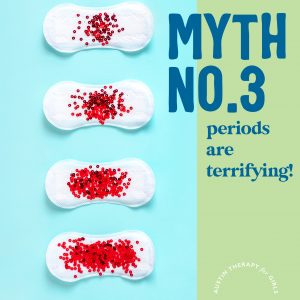
Myth 3: Periods are terrifying!
Periods, aka Aunt Flo, Shark Week, Time of the Month, and Code Red, can be scary if you are unprepared. Periods happen when your body sheds its uterine lining when there is no fertilized egg developing in the uterus. The lining leaves the body through the vagina as a bloody discharge known as menstruation/your period. If you have never experienced this before or had someone explain what is happening, it can warrant a freakout, but I want you to know you are not dying, and you will not bleed to death!
Having a period preparedness plan before Aunt Flo’s monthly appearance can make your period less scary. You can feel confident about how to provide yourself with support and proper care while menstruating. Below is a list of things to keep in your “Period Kit.”
- Period Underwear, Maxi Pads, Tampons, or Menstrual Cups – talk with your caregiver about the best option for you.
- Baby Wipes to help freshen you up when you can not take a shower
- Fresh pair of underwear in case you have a leak; depending on how heavy your flow is, it may be beneficial to carry an extra pair of pants and leave them with the school nurse.
- Non-scented soap for when you take showers
- Over-the-counter medications – talk to your caregiver if taking pain medication is appropriate for when you are having cramps.
- A water bottle filled with warm water, a sock filled with rice that you can microwave, or a heating pad. This is a holistic way to alleviate cramping, and at school, a nurse may be able to provide you with a heating pad or a similar alternative.
Myth 4: You’ll have to wear a bra for the rest of your life.
Boobs, Boobies, or Tatas, whatever you call your breasts remember they are AWESOME! Some people choose to wear bras and others do not. If you and your caregiver decide wearing a bra is right for you, the most important thing is that you feel comfortable in your body during puberty. Here are a few tips for taking care of your tatas:
- Don’t compare yourself to your friends; they may need to wear different sizes than you, as all our genes are different. Don’t shame yourself if you have smaller or bigger boobs than your friends. How do you do that? Affirmations can be helpful, especially when we put ourselves down for our looks. Telling ourselves, “You’re beautiful,” “You’re a queen,” or “You’re powerful” are some of my favorites.
- Ask for help: your mom, sisters, aunts, and grandmothers have all gone through this; ask them for help. They can guide you through training bras and moving on to more “official” bras.
- Check-in with yourself: Ask your questions, such as “Do I feel comfortable in this bra?”, “Am I feeling happy, excited, sad, or upset about my boob size?” and “Who can I talk to about boobs? Do I feel comfortable reaching out to them for support?”
We hope this answered some of your questions and cleared up a few puberty myths. Puberty is awkward at times, but it does not have to be shameful or scary. Puberty journeys look different for everyone. So when you notice your inner critic trying to get you to compare your journey to others, practice self-compassion, and remind yourself this is your journey and you do not have control over what genetics has in store for you.
Got more questions, or worried puberty is turning up the volume on your daughter’s anxiety? Our therapists have openings right now. See who’s available and book here.