



Summer Mother-Daughter Book Club for Tweens & Teens: 6-Week Connection Challenge
Looking for a meaningful way to connect with your tween or teen daughter this summer?
At Austin Therapy for Girls, we know summer can be a funny mix of freedom and feelings.
One minute you’re juggling camps, vacations, volleyball tournaments, sleepovers, and late-night Sonic runs. The next, your daughter is spending a little more time in her room, scrolling social media, overthinking a text, or suddenly worrying about next year.
For many girls, summer brings a welcome break from the stress of school. Anxiety often decreases when homework, tests, and busy schedules disappear. But without the structure of the school year, those pesky negative thoughts can sometimes get a little louder. Before we know it, August rolls around and worries about teachers, friendships, classes, and fitting in start creeping back in.
Every summer we receive calls asking about therapy groups. After years of experimenting with different formats, we’ve found that our camps tend to be the best fit during the summer months. But we also know that summer creates a unique opportunity for something many families are craving: connection.
That’s why we’ve created a free six-week Mother–Daughter Book Club designed for girls ages 12–17 and the people who love them.
Think less homework and book reports, and more coffee shop conversations, laughter, meaningful discussions, and a chance to better understand yourself and each other. Whether you’re reading by the pool, on vacation, or curled up on the couch with your favorite snacks, this book club is designed to spark conversations that might not happen otherwise.
Because sometimes the best summer memories aren’t the big trips or packed schedules—they’re the moments when we slow down enough to truly connect.
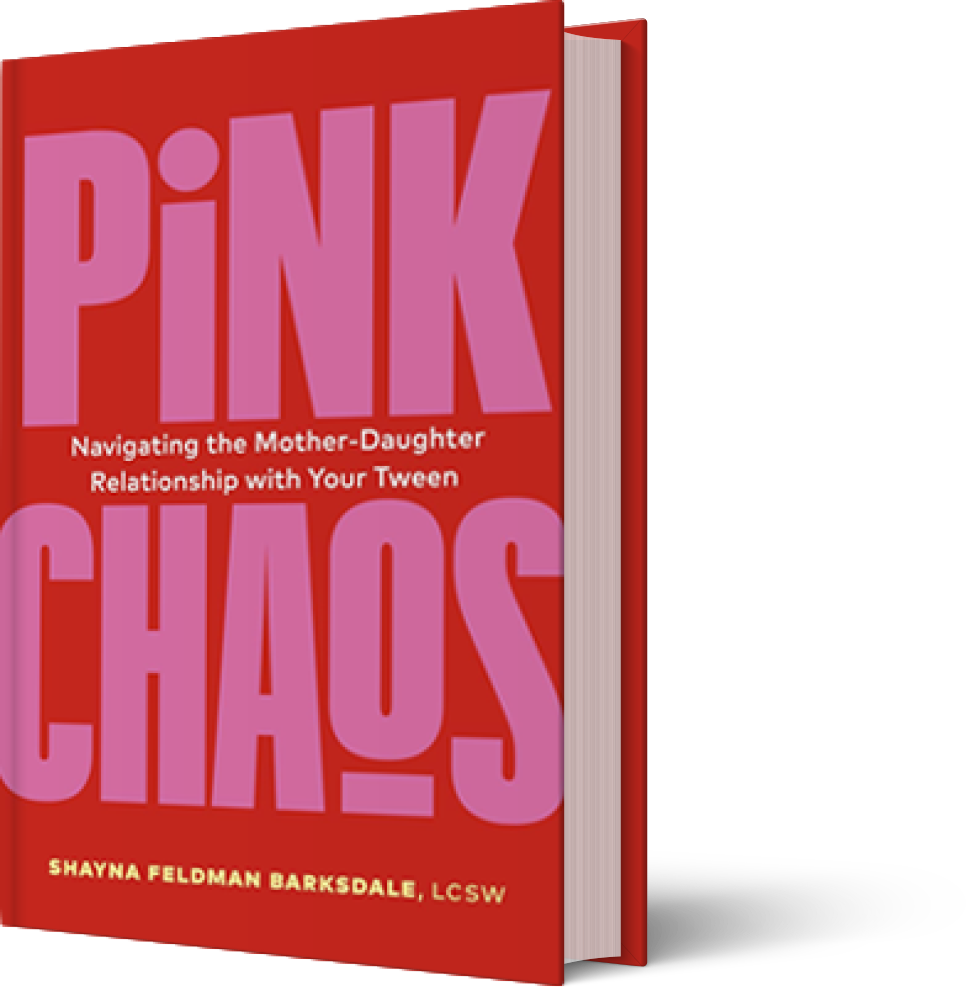
This summer bookclub with a twist, pairs Pink Chaos: Navigating the Mother–Daughter Relationship by Austin therapist and author Shayna Barksdale, LCSW-S, with Be Yourself and Other Bad Advice for tweens and teens by Meredith Walker, co-founder of Smart Girls.
As an added bonus, Be Yourself and Other Bad Advice includes a foreword by one of our current favorite humans, Amy Poehler. If you haven’t already discovered her Good Hang podcast, add it to your summer playlist. Fair warning: therapy jokes may be involved, which naturally earned it a spot on our favorites list.
Think less homework and more connection. Less pressure and more meaningful conversations. Less “How was your day?” and more “Tell me more about that.”
Whether you’re navigating friendship drama, anxiety, social media stress, growing independence, middle school chaos, high school transitions, or simply trying to stay connected through the tween and teen years, this challenge is designed to spark conversations that continue long after the last page is turned and summer comes to an end.
Why a Mother-Daughter Book Club?
Research consistently shows that strong parent-child relationships are one of the most important protective factors for mental health.
At Austin Therapy for Girls, many of the families we work with are looking for ways to:
- Improve communication
- Strengthen emotional connection
- Reduce conflict
- Support girls through friendship struggles
- Build confidence and resilience
- Better understand the emotional world of tweens and teens
This summer challenge offers a fun and practical way to do exactly that.
Week 1: Summer Kickoff & Vision Boards
This Week’s Focus:
Connection, intention, and creating your summer vision.
Summer often offers a slower pace, making it the perfect time to establish a weekly Mother-Daughter Book Club meeting. You can meet every week or move through the challenge at your own pace.
Read
Caregivers
- Pink Chaos Introduction
- Chapters 1–2
Daughters
- Be Yourself and Other Bad Advice Introduction
- Chapter 1
Activity: Create a Summer Vision Board
Using poster board, magazines, markers, stickers, or printed images, create a vision board that reflects your hopes for the summer.
Ask yourself:
- How do I want to feel this summer?
- What energy do I want to bring to my friendships and family?
- What books do I want to read?
- What adventures am I excited about?
- What goals do I have for myself?
Share your boards and discuss what you’re most excited about.
Austin Bonus Challenge
Visit BookPeople and pick up both books together to kick off your summer challenge. Bookstores are back!
Week 2: Every Feeling Has a Story
Emotions Are Messengers, Not Problems
One of the most important lessons we teach in therapy is that emotions aren’t good or bad—they’re information.
Read
Caregivers
- Pink Chaos Chapters 3–4
Daughters
- Chapters 1 and 2
Discussion Questions
- What emotions do you experience most often?
- Which emotions are easiest to talk about?
- Which emotions are hardest?
- What messages did you learn about emotions growing up?
Activity
Download the ATFG Dog Feelings Poster and identify emotions you’ve experienced this week.
Practice naming feelings without judging them.
Family Connection Challenge
Start a daily family feeling check-in.
Each person shares:: Happies and Crappies or Rose Thorn and Bud
Week 3: Values & Resilience
Discovering the Roots That Help Us Weather Life’s Storms
Girls who understand their values tend to make decisions that align with who they want to become.
Read
Caregivers
- Listen to the Unlocking Us podcast episode on living your values.
- Complete the accompanying values worksheet.
Daughters
- Chapter 3 Valuing Your Values is Valuable of Be Yourself and Other Bad Advice…
Activity
Identify your:
- Top 5 values and if you can narrow down to 2
Discussion Questions
- What do you want people to feel when they’re around you?
- Which value feels most important right now?
- Which value would you like to strengthen this year?
Family Challenge
Notice one choice you make this week that aligns with one of your values.
Week 4: Calming the Chaos
Building Your Coping Skills Toolbox
Every girl deserves a toolbox full of coping skills—and every caregiver deserves to know which tools actually help.
One of the biggest lessons we teach at Austin Therapy for Girls is that there is no single coping skill that works for every situation. Different moments call for different tools.
Read Together
- Pink Chaos Chapter 5
- As you read, each person choose their favorite calming tool and share why it works for them.
- Daughters: Continue with Chapters 4 and 5 in Be Yourself and Other Bad Advice
Discussion Questions
- What helps you calm down when you’re stressed, anxious, or overwhelmed?
- What coping skills don’t work for you?
- How can we better support each other during difficult moments?
- How do you know when it’s time to use a coping skill?
Activity
Create Your Calm-Down Toolbox Together
Brainstorm and write down coping skills that work for different situations:
When I need a distraction:
- Listening to music
- Watching a favorite show
- Coloring or creating art
- Playing with a pet
- Calling a friend
When my emotions feel really intense:
- Splashing cold water on my face
- Holding an ice cube
- Taking a brisk walk
- Deep breathing
When I need comfort and reassurance:
- Visiting my calm place
- Using a favorite mantra or affirmation
- Practicing a meditation
- Wrapping up in a cozy blanket
When I need space:
- Spending quiet time alone
- Journaling
- Reading
- Taking a break before talking
Remember: the goal of coping skills isn’t to make feelings disappear. The goal is to help us move through feelings in a healthy way.
Sometimes anxiety, sadness, frustration, or disappointment simply need time to pass. Not every feeling can be fixed immediately.
For daughters: Give yourself permission to use the tools that help and ask for space when you need it.
For caregivers: Sometimes the most supportive thing you can do is stay calm, stay available, and trust that your daughter can ride the wave of a difficult emotion without you needing to solve it.
The goal this week is simple: leave with a toolbox full of strategies that feel realistic, personalized, and effective for your family.
Week 5: When Things Don’t Go as Planned
Learning to Talk to Ourselves Like Someone We Love
Things don’t always go the way we hoped. We don’t make the team, get the grade we wanted, say the wrong thing, lose a friendship, or make a mistake. These moments can be disappointing, frustrating, and sometimes even heartbreaking.
Many girls struggle with perfectionism and self-criticism. They believe they need to do everything perfectly to be worthy, successful, or lovable. The truth is that mistakes and setbacks are part of growing up. Learning self-compassion helps us bounce back, build resilience, and treat ourselves with the same kindness we would offer a friend.
Read Together
Caregivers:
Read Chapter 6 of Pink Chaos: Teaching Your Daughter to Love Herself
Daughters:
Review the self-compassion section in Chapter 5 and read Chapter 6 of Be Yourself and Other Bad Advice.
Discussion Questions
Let’s Talk About Shame and Guilt
Caregivers, share the definition of shame and discuss the difference between shame and guilt.
- Guilt says: “I made a mistake.”
- Shame says: “I am the mistake.”
Talk about:
- Why guilt can help us learn and grow.
- Why shame often makes us want to hide, withdraw, or criticize ourselves.
- A time when something didn’t go as planned and how you handled it.
- What you would say to a friend going through the same situation.
Caregiver Note:
Conversations about shame can sometimes bring up uncomfortable feelings. Take your time. Consider reflecting on your own experiences first so you feel comfortable discussing the topic with your daughter.
Activity
Choose one of the following activities:
Create Your Own Self-Compassion Break
Develop a few phrases you can use when things don’t go as planned.
Examples:
- “This is hard right now.”
- “Everyone makes mistakes.”
- “I can be kind to myself while I figure this out.”
- “I am learning and growing.”
Write a Letter to Your Younger Self
Think about a difficult moment from your childhood or adolescence. Write a letter filled with kindness, understanding, and encouragement. What did you need to hear then that you can offer yourself now?
Remember
Self-compassion and empathy are powerful antidotes to shame.
The goal isn’t to avoid mistakes or disappointment. The goal is to learn that when life doesn’t go as planned, you can respond with courage, kindness, and understanding instead of criticism.
Family Challenge
Each day this week, practice catching one self-critical thought and replacing it with a self-compassionate one.
Instead of:
“I’m terrible at this.”
Try:
“This is difficult, but I can learn from it.”
Instead of:
“I always mess things up.”
Try:
“I made a mistake, and mistakes are part of being human.”
Week 6: Friendship, Connection & Social Media
Building Healthy Friendships in a Digital World
Friendships can be one of the greatest sources of joy—and one of the biggest sources of stress—for tween and teen girls. Between texts, group chats, social media, and in-person interactions, friendships today are more connected than ever before.
This week is about learning what healthy friendships look like, how to nurture meaningful connections, and how social media can impact our relationships, confidence, and emotional well-being.
Read Together
Caregivers:
Read Chapter 7 of Pink Chaos
Daughters:
Read Chapter 7 of Be Yourself and Other Bad Advice
Discussion Questions
- What qualities make someone a good friend?
- What helps friendships grow stronger?
- What are signs that a friendship may no longer be healthy?
- How do you know when you feel connected versus simply included?
- How do you typically feel after spending a lot of time on social media?
- What types of accounts leave you feeling inspired, encouraged, or informed?
- What types of accounts leave you feeling stressed, left out, or like you’re not enough?
- How does social media affect your friendships?
Activity: Social Media Experiment
For one week, choose a small social media challenge:
Ideas:
- Reduce screen time by 30 minutes each day.
- Take one social media-free evening.
- Avoid scrolling for the first hour after waking up.
- Replace scrolling time with a hobby, movement, reading, or time with family or friends.
At the end of the week, discuss:
- What was harder than expected?
- What was easier than expected?
- Did your mood change?
- Did you notice changes in your anxiety or self-talk?
- Did you spend more time connecting with people in real life?
- What did you learn about yourself?
Remember
The goal isn’t to eliminate social media. Social media can be fun, creative, and a great way to stay connected.
The goal is to become more aware of how it affects your mood, friendships, self-esteem, and mental health.
Healthy friendships help us feel seen, valued, accepted, and supported. The best friendships allow us to be fully ourselves—not a filtered version of ourselves.
Celebrate Your Summer Connection Journey
Congratulations on completing your six-week Mother-Daughter Book Club!
Take a final photo together, revisit your vision boards, and reflect on:
- What surprised you?
- What did you learn about yourself?
- What did you learn about each other?
- What conversation will you remember most?
Because the goal was never simply reading books.
The goal was creating moments of connection that strengthen your relationship long after summer ends.
Looking for Additional Support?
At Austin Therapy for Girls, we specialize in therapy for girls, tweens, teens, young adults, and their families throughout Austin and across Texas. Our therapists help girls navigate anxiety, friendship challenges, ADHD, perfectionism, self-esteem concerns, emotional regulation, and major life transitions.
If your daughter could use additional support, we’d love to help. Schedule with one of our therapist today.