
🍁 Falling for Gilmore Girls (Again): What the Show Teaches Us About Mother-Daughter Relationships
It’s finally fall — Austin style. On November 1st, that means sunny 70s during the day and a crisp 40s at night. The shift has everyone saying “sweater weather” in their best New Jersey accent (cue the SNL skit). There’s something about this time of year — the cooler air, the cozy coffee vibes — that makes us all crave comfort shows.
And for many of my clients at Austin Therapy for Girls (and yes, us therapists too!), that means re-watching Gilmore Girls.
What continues to hook so many of us — especially mothers and daughters — isn’t just the caffeine or the falling leaves. It’s the relationship between Lorelai and Rory Gilmore, a dynamic that feels both magical and messy. They’re best friends, confidants, and each other’s safe place to land. Yet beneath the witty banter and Stars Hollow charm, their connection mirrors the real-life challenges that show up in therapy sessions — things like boundaries, independence, and emotional closeness.
Gilmore Girls was a defining moment in early-2000s TV, and it still offers timeless lessons about the beauty and complexity of the mother-daughter relationship.
As we step into November — the start of the holiday hustle — it’s the perfect time to slow down and reconnect. Whether you’re a mom, daughter, or therapist who loves a good rewatch, taking time to reflect (and maybe grab a latte while you do) can remind us what healthy connection really looks like.
🌸 What the Gilmores Get Right: Warmth, Safety & Trust
1. Deep Emotional Connection
Lorelai and Rory talk about everything. They model openness, trust, and emotional safety — three cornerstones of a healthy mother-daughter relationship. This kind of honest communication is something I encourage every parent to nurture, especially during the tween and teen years.
When daughters know they can talk to their moms about the big stuff (and the messy stuff), they’re more likely to develop resilience, self-worth, and confidence in who they are.
Just this week on my pink couch, I met with a fairly new client who said she didn’t have much to talk about in session. The truth? She didn’t — because she had already talked through everything with her mom. That kind of connection doesn’t mean life is perfect, but it does mean a daughter feels emotionally safe, which is one of the best predictors of long-term wellbeing.
2. A Nonjudgmental Stance
Even when Rory makes mistakes (hello, Dean/Jess/Logan drama), Lorelai stays grounded. She might not always agree with Rory’s choices — and let’s be real, when it comes to boys, clothes, and makeup, most moms have opinions! But instead of lecturing or shaming, Lorelai listens. She stays connected. That steady presence gives Rory a deep sense of security — and that’s foundational for emotional growth.
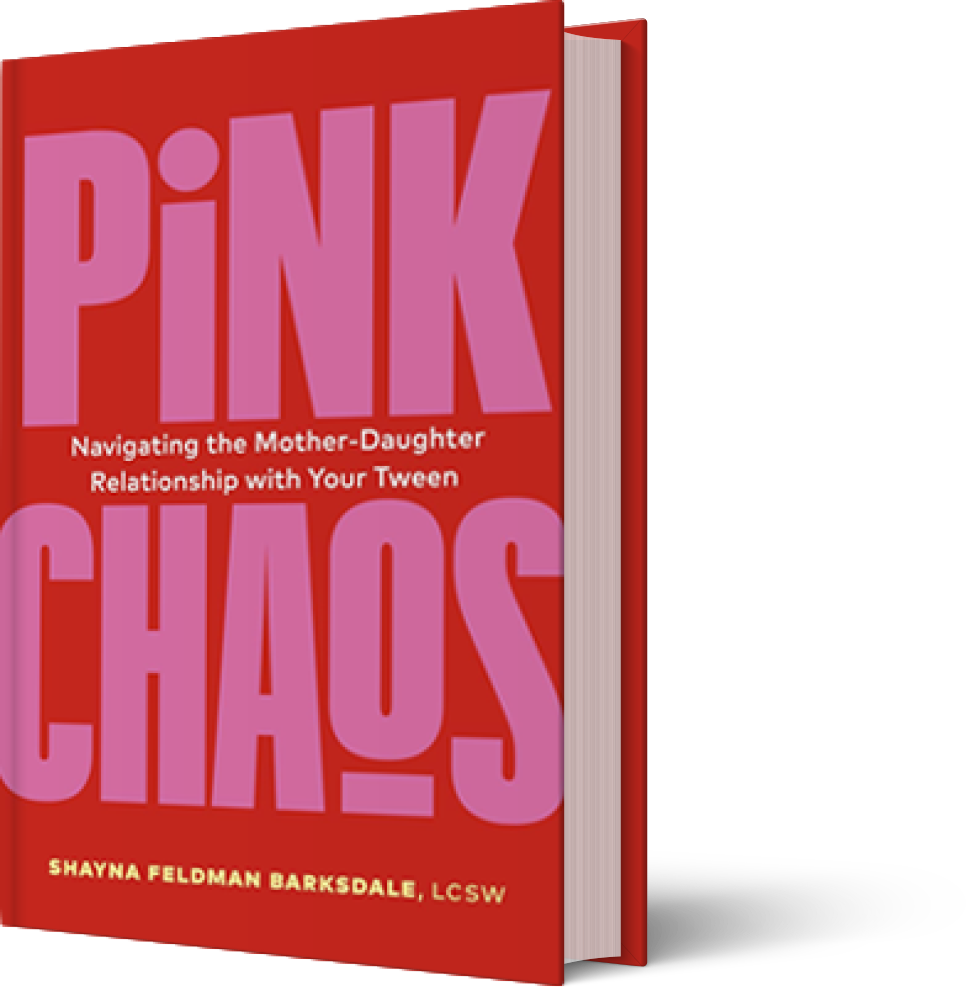
In Pink Chaos, I remind moms to be that safe place to land when life gives your daughter a few speed bumps. Because let’s be honest — life is full of them. The goal isn’t to clear the road; it’s to teach her how to keep moving forward with compassion, humor, and connection. When she knows she can come home — emotionally or literally — after a hard moment, that’s when real resilience starts to take root.
3. Letting Go with Love
One of the most beautiful parts of Gilmore Girls is watching Lorelai and Rory’s relationship evolve over time. As Rory becomes more independent — making her own choices (and yes, cue the Logan years) — Lorelai learns to step back and let her daughter grow. That kind of trust doesn’t mean she stops caring; it means she recognizes that growth often comes from mistakes.
In Pink Chaos, I call this the art of letting go with love — allowing your daughter to stretch her wings while still knowing you’re there if she falls. It’s a delicate balance between guidance and freedom, and one that so many mothers struggle with, especially during the tween and teen years.
Parenting expert Dr. Becky Kennedy calls this finding the balance between boundaries and autonomy. When parents make every decision for their child, it can unintentionally send the message, “You can’t handle this.” But when we offer choices within structure — like “You can study before dinner or after” — we build trust and confidence. Kids learn that their voice matters and that they’re capable of navigating life’s ups and downs.
When moms can hold space for both independence and connection, daughters develop confidence, self-reliance, and a deeper appreciation for the relationship. And just like Lorelai and Rory, they often circle back home — ready to share what they’ve learned along the way.
🌧️ Where Things Get Messy: Boundaries & Enmeshment
1. Best Friend vs. Parent
The “we’re besties” vibe is sweet — especially in Gilmore Girls — but it can blur some important lines. Lorelai doesn’t always set clear boundaries, which sometimes leaves Rory without the structure teens actually need. In real life, that can show up as a lack of accountability or difficulty managing conflict.
As I say in Pink Chaos:
“Don’t be your daughter’s bestie — help her find one. This is not an episode of Gilmore Girls.”
Being your daughter’s safe place to land is not the same as being her BFF. When parents step into the “best friend” role, it can make it harder for girls to build strong peer connections — or to hear hard truths when they need guidance, not a buddy.
2. Enmeshment: When the Line Between ‘Me’ and ‘You’ Gets Blurry
Lorelai and Rory are incredibly close — and while that closeness is beautiful, there’s a difference between connection and enmeshment.
Enmeshment happens when a child starts to take on a parent’s emotional world as their own. Instead of feeling free to develop her own thoughts, feelings, and identity, a daughter may feel responsible for managing her parent’s emotions.
👉 Enmeshment might look like:
- A daughter feeling guilty for having separate opinions, friends, or interests.
- A mom oversharing adult worries or relying on her child for emotional support.
- The relationship feels “too close to breathe,” where independence can feel like betrayal.
When this happens, daughters can struggle later with boundaries, decision-making, and emotional independence. Tween and teen girls need to know they can love their moms deeply and still be their own person.
In therapy, I often remind families: closeness isn’t about having no space between you — it’s about having healthy space and trusting the connection enough to let your child grow.
3. When Mom’s Anxiety Takes the Wheel
Sometimes, what looks like over-involvement or enmeshment is really a mom’s anxiety in disguise. When our daughters pull away, make risky choices, or seem distant, it can activate every protective instinct we have. The urge to fix, control, or hover usually comes from love — but it can also send the message, “I don’t believe you can handle this.”
In Pink Chaos, I call this the anxious loop — the more worried we become, the more we try to control; the more we control, the less our daughters trust themselves. The way out is through self-awareness and regulation. Before jumping in, pause and ask:
“Is this about her growth or my anxiety?”
When moms learn to soothe their own nervous systems — take a walk, phone a friend, or journal before reacting — they create space for their daughters to learn resilience. It’s not easy, but it’s the kind of emotional modeling that builds strong, confident young women.
👑 And Then There’s Emily: Generational Patterns
Lorelai and Emily’s strained relationship adds another layer to the Gilmore Girls story. Emily loves Lorelai deeply, but she often struggles to express it in a way Lorelai can receive. That push-pull mirrors what so many mothers and grandmothers experience — unhealed patterns that quietly ripple down through generations.
Breaking these cycles — with compassion, curiosity, and self-awareness — is at the heart of healing. In Pink Chaos, I explore how we can interrupt these inherited dynamics and begin to create new ways of showing up for ourselves, our daughters, and the women who raised us.
💡 Real Life Isn’t Stars Hollow — But Connection Is Possible
The truth is, Lorelai and Rory’s bond resonates because it’s beautifully imperfect. It reminds us that love and conflict can coexist, and that connection doesn’t mean perfection — it means repair, empathy, and presence.
In real life, building a strong mother-daughter relationship means balancing warmth with boundaries — being your child’s safe place to land, not her mirror. It means showing up with love and structure, especially during the tween and teen years when everything feels like it’s in motion.
And while our lives may not look like Stars Hollow, the lesson still stands: when we create safety, trust, and space for honest conversation, connection always finds its way back home.
💬 Ready to Strengthen the Connection?
If this season has you reflecting on your relationship with your daughter — or you notice she’s needing extra support navigating friendships, confidence, or change — you don’t have to do it alone. Austin Therapy for Girls is a caring grouyp of helping professionals ready to help. Start now